




















-

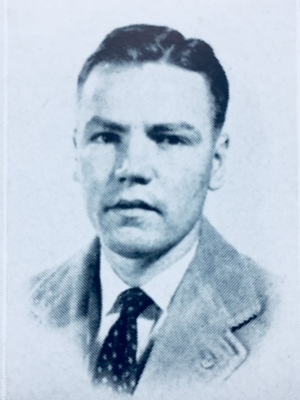
Peggy Liggit Oral History Interview, 2017
Matt Jones
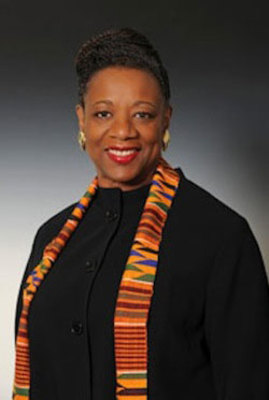
Serving Eastern Michigan University for more than 20 years, Peggy Liggit began her tenure with EMU as a professor of biology and science education. After spending three years as Director of Academic Assessment, Liggit became Director of the Bruce K. Nelson Faculty Development Center. Her research focus now includes learner-centered teaching in higher education, organizational learning, humanized assessment practices, and faculty peer-coaching. In this interview, conducted during the opening of the Bruce K. Nelson Faculty Development Center, Liggit shares personal recollections of Bruce Nelson, and discusses the representation of Nelson’s principles of education on the EMU campus, and more specifically, in the Faculty Development Center that bears his name.
-
P. George Bird and Reinhard Wittke Oral History Interview, 2016 April 23
Alexis Braun Marks
P. George Bird taught in the Theatre department at Eastern Michigan University from 1956-2006. The interview is an account of his time teaching on campus, his most memorable productions and the planning and construction of Quirk Theatre. Reinhard Wittke was a professor in the History Department at Eastern Michigan University from 1956-1990. During his time at Eastern, Wittke established and was best known for establishing the European Adventure Tours in 1960, which became International Studies Program. This is the third part in a three part series.
-
P. George Bird Oral History Interview, 2016 April 19
Alexis Braun Marks
P. George Bird taught in the Theatre department at Eastern Michigan University from 1956-2006. The interview is an account of his time teaching on campus, his most memorable productions and the planning and construction of Quirk Theatre. This is the first part in a three part series.
-
P. George Bird Oral History Interview, 2016 April 22
Alexis Braun Marks
P. George Bird taught in the Theatre department at Eastern Michigan University from 1956-2006. The interview is an account of his time teaching on campus, his most memorable productions and the planning and construction of Quirk Theatre. This is the second interview in a three part series.
-
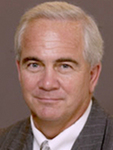
Philip Incarnati Oral History Interview, 1998 May 25
Laurence Smith
Philip Incarnati served as Chair of the Board of Regents from 1995 to 2005. In this interview, Incarnati details his high school collegiate experience, and his subsequent time at a student at Eastern Michigan University. Incarnati discusses campus culture at length, from campus streaking to Playboy Magazine’s designation of EMU as one of the top ten party schools. This interview was conducted for the purpose of gathering primary research for Laurence Smith’s book, Eastern Michigan University: A Sesquicentennial Portrait (1999).
-
Phillip, Interview, 2025
Micah Bookout
In this interview community member Phillip shares his experience at his first ever Ypsi Pride. Phillip talks about the first Pride he attended in 2015, sharing that that was the first time he truly saw love as a gay man, and that he enjoys how tight knit Ypsi Pride feels.
-
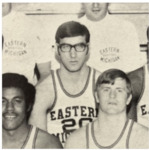
Phil Riggio, Oral History Interview, 2022
Matt Jones
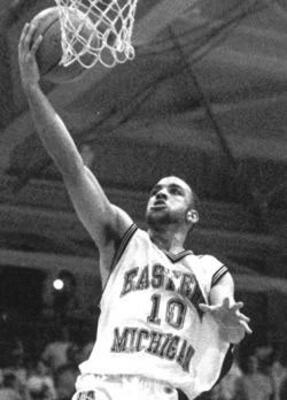
Phil Riggio was an active member of the Arm of Honor Fraternity from 1968 until 1975, coming to EMU from Detroit, MI, where he sold produce from the back of a wagon before helping with the family produce business. Riggio's sons have followsed him into the business as well. Riggio details his father's journey to America from Sicily, and learning the tgricks of the produce trade from his father. There were expectations for Phil to attend college, he became interested in attending EMU after his team, University of Detroit, played them several times during the basketball season. Riggio details the bonds between Arm brothers, social movements on campus, and the "tight-lipped and tight knit" nature of the frat. Riggio describes initiation rituals, mandatory rides, and what happened when a pledge wanted out. Riggio, a reknown basketball player at EMU, also talk abotu playing at Bowen Fieldhouse, running in intramural cross country events, and the process of evicting the Arms from the fraternity house in 2015. President of the Arm of Honor Alumni Chapter in 2015, Riggio spearheaded the effort to clean up the image of the Arms.
-
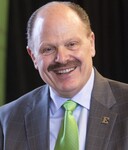
President James Smith, Oral History Interview, 2024
Cassandra Mitchell and Finn Vincent-Fix
James Smith is Eastern Michigan University's 23rd president, a role he has been in since 2016. In this interview, Smith recounts how he got into a career in educational policy, his time working in the K-12 public school system, and moving up the ranks from professor, to administrator, to dean, and finally to being a university president. Smith explores his passion for international issues, his commitment to diversity, equity, and inclusion, and how he came to join the President’s Alliance on Higher Education and Immigration. Smith describes how he jumped at the chance to open on-campus housing to twelve Afghan families in early 2022, the impacts of this decision, the university’s collaboration with Jewish Family Services of Washtenaw county, and other efforts EMU is undertaking to ensure the campus is welcoming to all.
-
Quanzelle, Interview, 2025
Micah Bookout
In this interview community member Quanzelle shares their experiences at Ypsi Pride, sharing that they first attended many years ago pre-pandemic. They discuss the need for acceptance and love, the joy of reconnecting with old friends, and reminds everyone to be nice to people.
-
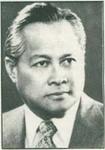
Quirico Samonte, Oral History Interview, 2019
Matt Jones
Dr. Quirico Samonte served as professor of education at Eastern Michigan University from 1963 until his retirement in 2001. Aside from teaching, Samonte served as University Coordinator for the National Council of Accreditation for Teacher Education, Chief of Party to the Basic Education Development Project in Yemen, and Advisor to the Ministry of Education for the Primary Curriculum Development Project in Swaziland. Born and raised in the Philippines, Samonte was a boyhood acquaintance of future-President of the Philippines, Ferdinand Marcos.
-

Rachel Anthony, Interview, 2023
Christopher Durden
In November of 2023, Eastern Michigan University’s LGBT Resource Center hosted an event in collaboration with the University Archives’ Oral History Program during Transgender Awareness Week where students could share their experiences with being part of the LGBT community on and off campus. EMU student Rachel Anthony talks about growing up queer, finding comfort in the English Department, and self-care in stressful times.
-

Rachel Resin & Shoshanna Wechter, Oral History Interview, 2023
Katie Delahoyde
In this interview longtime Ypsi residents Rachel Resin and Shoshanna Wechter share their experiences with Ypsi Pride. Wechter explains that she was at the first one in 2017, helped plan in 2018, and loves that Pride is in Depot Town because she lives there. Both Resin and Wechter share that they love the Ypsi community and how they can't walk outside without seeing someone they know.
-

Ray Mullins, Oral History Interview, 2022
Matt Jones
In 2021, Eastern Michigan University Archives lecturer Matt Jones began documenting the story of Ypsilanti’s Human Rights Ordinance #1279 in an effort to explore the ways in which local queer activism has evolved multi-generationally in Ypsilanti. What began as a refusal of service by a local print shop to a small EMU student group quickly turned into a years-long battle over who was deserving of basic human rights. To the LGBTQ activists and community members documented here, they had always been present in the community: working, paying taxes, painting their houses, mowing their lawns, attending council meetings, and even serving on council. This ordinance battle was about more than just LGBT rights—it was about protecting the human rights of all Ypsilantians. On January 12, 2022, Jones talked with attorney, community leader, organizer, and former president of the Willow Run NAACP, Ray Mullins. Under Mullins' leadership, the Willow Run chapter of the NAACP increased its membership, established and developed community youth programs, and won several awards for programming excellence. During the ordinance campaigns, Mullins stood with the organizers in Citizens for Community and Ypsilanti Campaign for Equality, giving them a much-needed and most-important endorsement. Despite receiving backlash from some community members, he remained firm in his alignment, and stayed true to his belief that discrimination is wrong in all its forms. Mullins continued to provide safe spaces and opportunities for Ypsi's youth, and worked closely with churches to maintain strong community relationships throughout the ordinance campaigns and beyond. In this interview, he talks about his upbringing and connections to the Civil Rights Movement, the importance of community care and protection, and of nurturing under-represented youth. Mullins continued to be a beloved cornerstone of the community, representing compassion and integrity until he passed in 2023.
Please note, this record is transcript only.
-
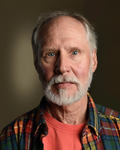
Richard "Dick" Schwarze, June 20, 2018
Matt Jones and Grace Pare
Dick Schwarze was campus photographer at Eastern Michigan University from 1970 until 2006. Before joining EMU staff, Schwarze served in the United States Army in Vietnam, and briefly attended Wayne State University in Detroit. During his 36 career year here, he won numerous campus and professional awards, including “Institutional Values Award for Continuous Improvement, Innovation, and Customer Service” in 2005. His photography captures many aspects at EMU and has been used for promotional work and numerous public relations campaigns.
-
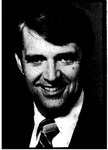
Richard Robb Oral History Interview, 1998 June 3
Laurence Smith
Richard Robb served on the Eastern Michigan University Board of Regents from 1967 to 1993, and as Chair of the Board from 1975-1985. In this interview, Robb details his relationships with several EMU administrators of the period, and defends the appointment of James Brickley to President of EMU. Robb also discusses the importance of athletics in the collegiate experience and the decision to change the EMU logo. This interview has been distributed over two cassette tapes. This interview was conducted for the purpose of gathering primary research for Laurence Smith’s book, Eastern Michigan University: A Sesquicentennial Portrait (1999).
-
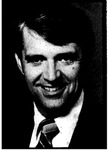
Richard Robb Oral History Interview, 1998 June 3
Laurence Smith
Richard Robb served on the Eastern Michigan University Board of Regents from 1967 to 1993, and as Chair of the Board from 1975-1985. In this interview, Robb details his relationships with several EMU administrators of the period, and defends the appointment of James Brickley to President of EMU. Robb also discusses the importance of athletics in the collegiate experience and the decision to change the EMU logo. This interview has been distributed over two cassette tapes. This interview was conducted for the purpose of gathering primary research for Laurence Smith’s book, Eastern Michigan University: A Sesquicentennial Portrait (1999).
-
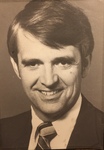
Richard Robb, Oral History Interview, 2021
Katie Delahoyde and Matt Jones
Longtime Ypsilanti resident and EMU Regent Dr. Richard Robb was named chair of the University Logo Committee and tasked with finding a new EMU logo to replace the Huron. Understanding that the logo was offensive to many students, Robb predicted a quick decision and adjournment. Fending off the ire of alums attached to the logo as well as the frustration and occasional apathy of fellow committee members, Robb found himself entrenched in a much larger debate over the identity of the school itself.
-
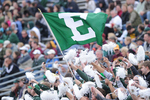
Rick Ross, Interview, 2022
Cassandra Mitchell and Cheyelle Pitts-Chatman
On October 1, 2022, students from the EMU Archives and Oral History Program recorded stories of EMU students past and present. Using the EMU Aerie, the Archives’ mobile oral history recording booth, student oral historians captured the formative experiences and perspectives of EMU alums from a variety of campus eras. Here, EMU alum Rick Ross (class of 1975) talks about his experience with the EMU Track team, including Coach Bob Parks. Ross names alums Kurt Hill and Judy Sturgis-Hill for helping him navigate through college, crediting them for his four degrees from EMU. Ross is also one of the founders of the Black Gospel Choir, and talks briefly about the founding of the group. A member of Kappa Alpha Psi Fraternity, Ross describes the lasting relationships formed in the fraternity and the mentees he has known throughout his years as an educator.
-
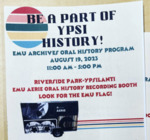
Robert Anschuetz, Oral History Interview, 2023
Katie Delahoyde
Robert Anscheutz, born in 1965 in Ann Arbor, shared his memories of growing up in Ypsilanti, attending local schools, and the community events he participated in, including the sesquicentennial celebration in 1973 and the bicentennial celebration in 2023. He highlighted the historical significance of Ypsilanti, such as the Huron Hotel and the log cabin reconstruction in 1923, and the community-driven heritage festivals. Robert, who now splits his time between Orlando and Ypsilanti, emphasized the importance of historical preservation and community engagement, noting recent events like the historical walking tour and the time capsule opening. He expressed hope for Ypsilanti's future while maintaining its historic charm and community spirit.
-
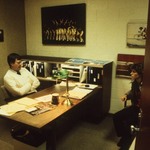
Robert England, Oral History Interview, 2019
Matt Jones
Bob England served Eastern Michigan University from 1968 until his retirement in 2011. In this interview, England, who served as Director of Intramurals and Recreation, speaks of the development of the Intramurals and Recreation program into one of national prominence and record attendance. England also discusses the turbulence of the late 1960s, the construction of Olds-Robb Intramural and Recreation Building, the EMU Lake House, and the inception of the annual Huron River float-a-thon. England speaks of his football playing days at University of Michigan, and of the struggle to increase attendance at EMU sporting events.
-

Roberto Frausto, Oral History Interview, 2023
Kat Hacanyan
In this interview Ypsi native Roberto Frausto shares their experiences at Ypsi Pride, detailing that they first attended a few years ago when they were coming to terms with their identity. Frausto shares that they identify as two-spirit, and they did not find that label for themself until they were in their twenties. Frausto also explores the power of queer connection, their thoughts on drag, and their love for their hometown of Ypsilanti.
-
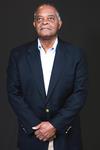
Robert Smith, September 27, 2018
Rachel Burns and Matt Jones
Robert Smith is an alumnus of Eastern Michigan University who graduated from the university in 1971. During his time at EMU, Smith was involved with the Black Student Association and Campus Service Corps. Smith was instrumental in the creation of Black Demands and the takeover of Pierce Hall in February 20th, 1969. Smith graduated from Eastern in 1971 with a double major in history and graphic arts. Smith went on to serve the communities of Detroit and Highland Park in roles at the Charles H. Wright Museum of African American History, Wayne State University, and the Highland Park School District.
-
Robin Axelrod, Oral History Interview, 2025
Kat Hacanyan
Robin Axelrod is CEO of Axelrod Coaching and Consulting and a member of the Center for Jewish Studies advisory board. A licensed social worker and established leader in the Metro-Detroit area, she became part of CJS after first hearing about it while working at the University of Michigan. Axelrod's time with U of M has provided her with a unique insight to the experiences of Jewish college students, which she is able to bring forth into her work in the advisory board here. In this interview, she talks about the things that helped shape her Jewish identity, being one of the first graduates of Judaic Studies at U of M, and the opportunities CJS provides to EMU students and beyond.
-
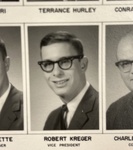
Robin Kreger, Oral History Interview, 2022
Matt Jones
Robin "Hawk" Kreger was an active member of the Arm of Honor Fraternity from 1962 until 1965.Growing up in Wyandotte, MI, Kreger was the younger brother of the infamous Dale "Luke" Kreger, also an Arm of Honor member in this collection. Grandson of the mayor of Wyandotte, Kreger details growing up in a family that was a fixture of the community, along with several other Arm members as well. Kreger describes his brother Luke and some of the hi-jinx they found themselves in as fraternity members. Kreger talks of his initiation into the fraternity, the reputation of the fraternity, strong personalities in the fraternity, and the reason for his nickname, Hawk. Kreger also speaks of how to survive the intense swatting sessions, rivalries with other fraternities, and the working class, local aspect of the fraternity that made it so unique.
-
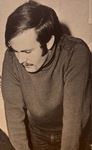
Rob Musial, Oral History Interview, 2022
Akaiia Ridley and Matt Jones
In the Fall of 2022, Matt Jones’s Oral History Techniques class conducted a set of interviews documenting the stories behind the student unrest on Eastern Michigan University’s campus from 1966-1972. Rob Musial was a student at EMU during the late 1960s and early 1970s, and editor of the Eastern Echo during that time. Rob was involved with reporting on campus demonstrations and student unrest during his time there, working to make the campus aware of what was going on.
An initiative that began in 2017, the University Archives has begun to digitize items from the Historical Audio Recordings collection and other collections. We have sorted these recordings into four categories: Lectures and Presentations, Oral Histories, Performances and Speeches.
At present the category of Oral Histories is the only category that we are actively adding to. With support from the Office of the Provost, the University Archives has been interviewing current and emeritus faculty, staff and students on their experiences at Eastern Michigan University.
Printing is not supported at the primary Gallery Thumbnail page. Please first navigate to a specific Image before printing.